

| Jewelry Material | Everyday Wear | Shower | Pool / Ocean | Best For | Key Note |
|---|---|---|---|---|---|
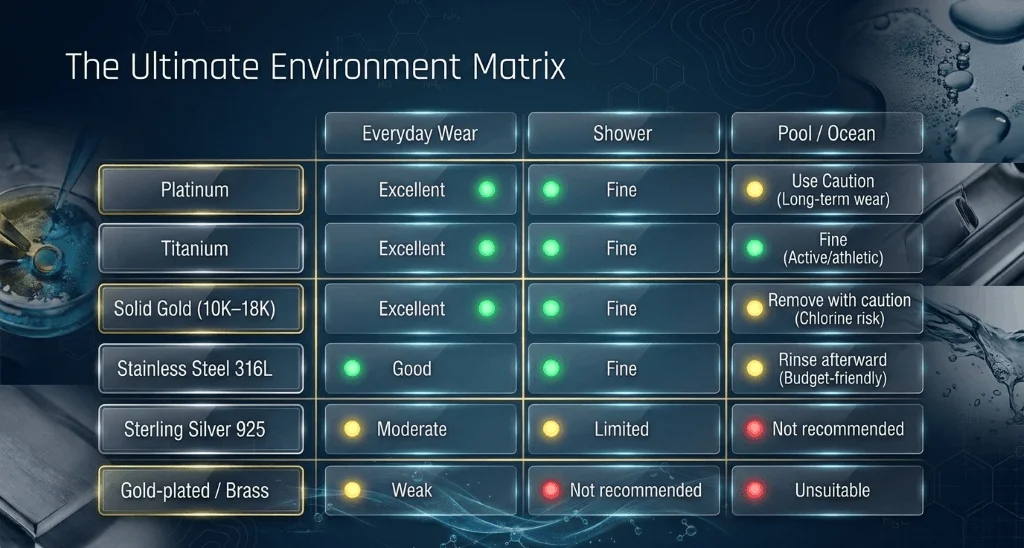
| Solid Gold (10K–18K) | Excellent | Fine | Remove with caution | Daily wear | Chlorine can react with metal alloys (copper/silver) |
| Platinum | Excellent | Fine | Use caution | Long-term wear | Excellent resistance to corrosion and tarnishing |
| Titanium | Excellent | Fine | Fine | Active/athletic lifestyle | Strong resistance to saltwater |
| Stainless Steel 316L | Good | Fine | Rinse afterward | Everyday, budget-friendly | Affordable option with decent durability |
| Gold-filled / Vermeil | Moderate | Short-term only | Not recommended | Occasional wear | — |
| Sterling Silver 925 | Moderate | Limited | Not recommended | Occasional wear | — |
| Gold-plated / Brass | Weak | Not recommended | Unsuitable | Short-term use only | — |
For everyday wear, 14K solid gold is one of the most durable and reliable choices in fine jewelry. That said, even solid gold isn’t ideal for constant exposure to chlorine, detergents, saltwater, and other chemicals — so it’s best to take it off before swimming or showering.

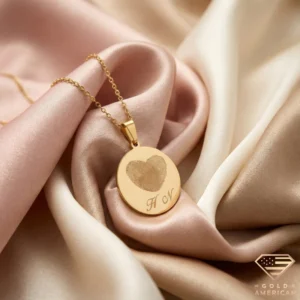
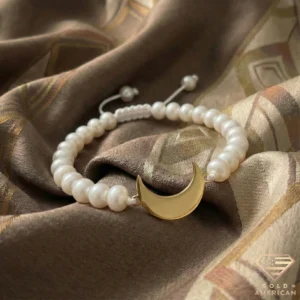
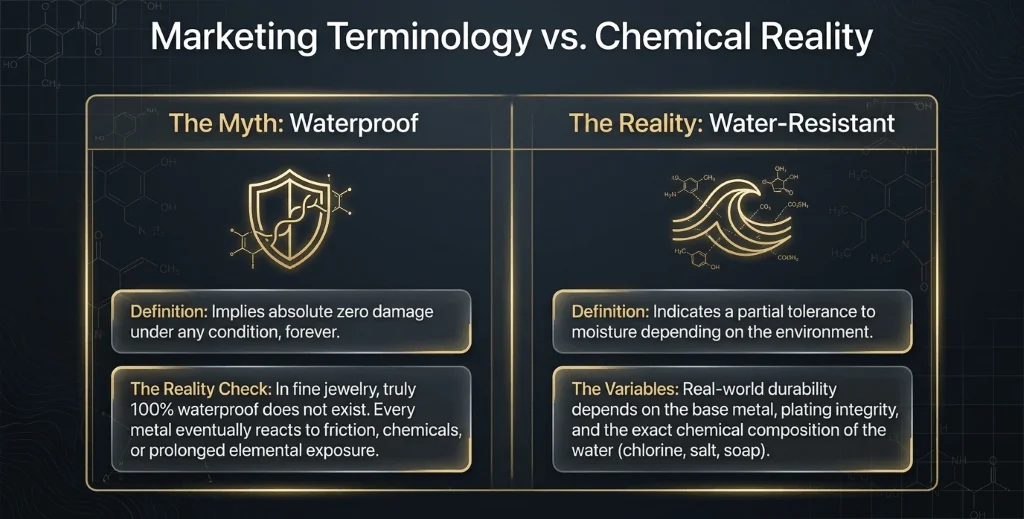
“Waterproof” and “water-resistant” aren’t the same thing: waterproof implies no damage under any condition, while water-resistant only means partial tolerance to moisture. In reality, no piece of jewelry stays 100% waterproof forever — real-world durability depends on the base metal, the plating, and how much contact it gets with chlorine, salt, sweat, soap, and everyday friction.
Quick Guide: Metals vs. Water
✅ Excellent
Platinum & Titanium: Highly resistant to water, chlorine, and saltwater. Best for active lifestyles.
⚠️ Use Caution
Solid Gold (10K-18K): Great for daily showers, but prolonged exposure to pool chlorine can react with the alloys.
🚫 Avoid Water
Gold-Plated & Brass: Will tarnish, wear down, or oxidize quickly when exposed to pool chemicals or frequent showers.
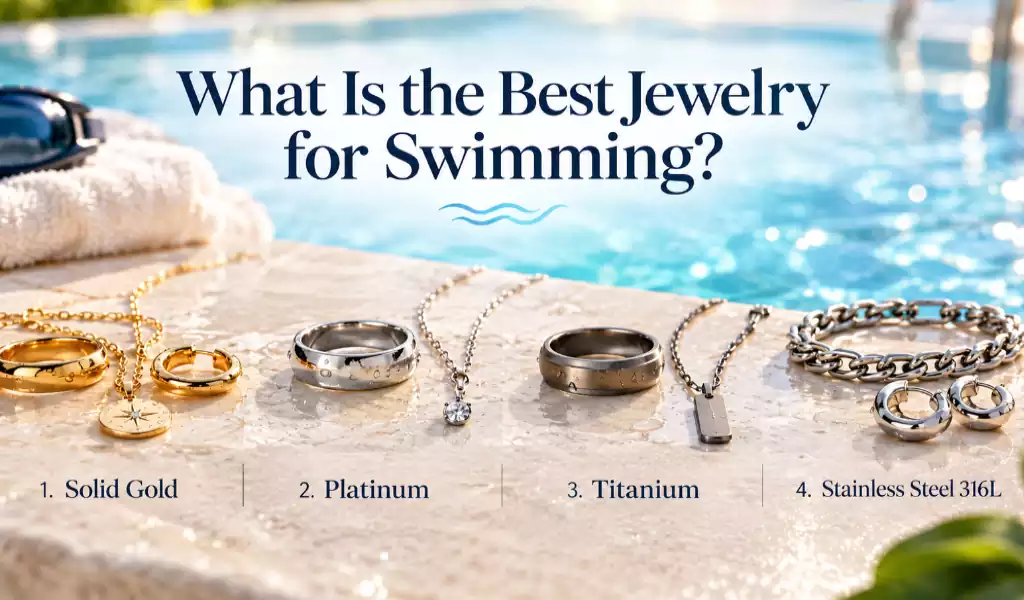
What Is the Best Jewelry for Swimming?
Best Jewelry Materials for Water Exposure
🥇 Solid Gold
Daily wear
Good durability
Avoid chlorine
⚪ Platinum
Excellent corrosion resistance
Long-term wear
⚙️ Titanium
Active lifestyle
Strong water resistance
🔩 Stainless Steel
Affordable
Everyday moisture resistance
1. Solid Gold
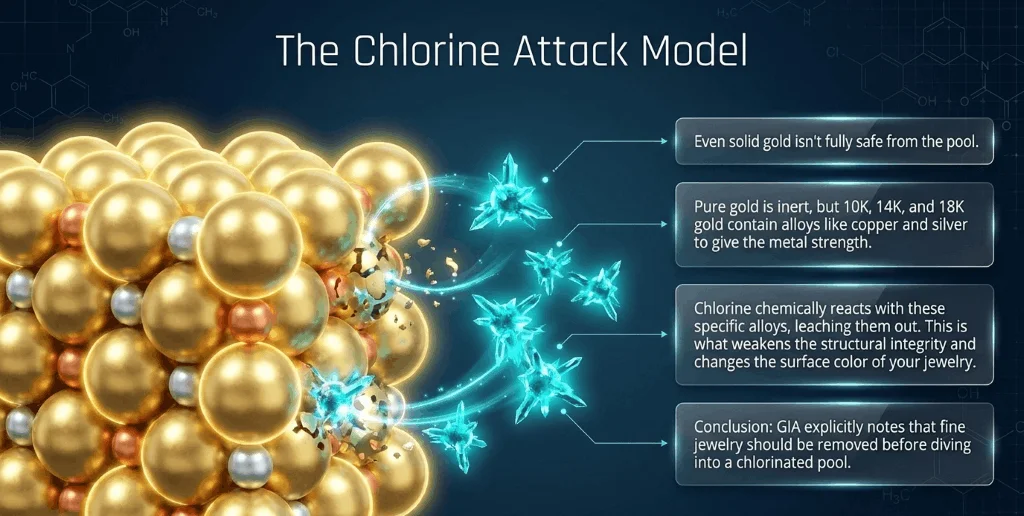
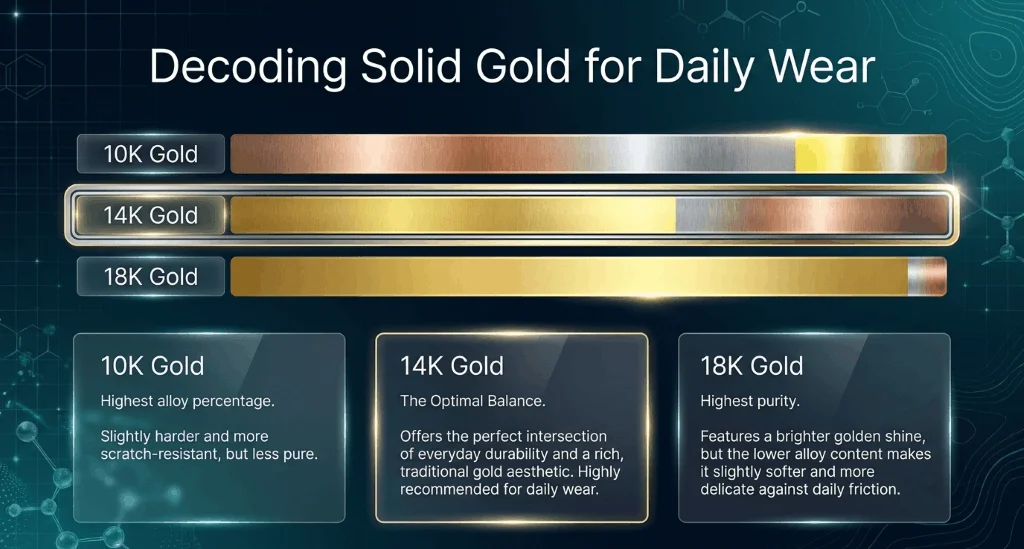
Solid gold has strong water resistance, making it a reliable daily-wear choice. The karat affects durability directly: 10K is slightly harder and more scratch-resistant due to a higher percentage of other alloys; 14K offers a good balance between durability and a rich gold look, making it the most popular choice for daily wear; 18K, despite its brighter shine, is a bit more delicate because of its lower alloy content. Importantly, even solid gold isn’t fully safe from chlorine — chlorine can react with the metal alloys in gold (like copper or silver) and gradually change the color or surface of the piece.
While 18K gold features a higher gold purity and a brighter golden shine, its lower alloy content makes it slightly softer and more delicate against daily friction. To understand how karat ratings impact purity, durability, and daily use, check out our guide explaining what does k18 mean on jewelry?.
2. Platinum
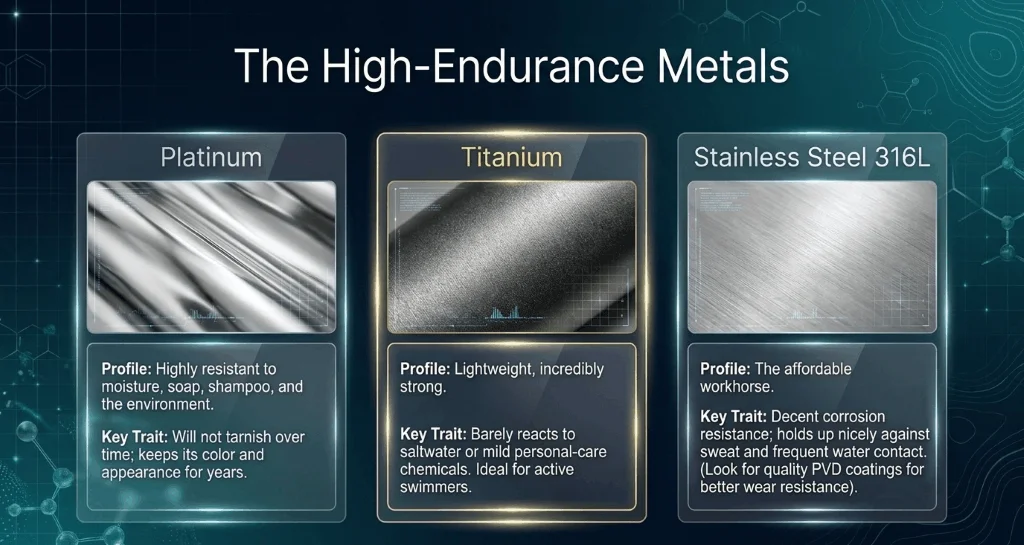
Platinum is one of the most water- and environment-resistant metals, making it well-suited for long-term, everyday wear. It holds up strongly against corrosion and tarnishing, keeping its color and appearance for years.
3. Titanium
Titanium is lightweight, strong, and highly resistant to water and chemicals — qualities that make it ideal for active people and swimmers. It barely reacts to saltwater, which makes it more practical than many pricier metals.
4. Stainless Steel 316L
Stainless steel 316L is a more affordable option with decent corrosion resistance. It works well for everyday and athletic use, holding up nicely against moisture, sweat, and frequent water contact.
Why You Should Remove Jewelry Before Swimming
Should You Remove Your Jewelry?
| Situation | Recommendation |
|---|---|
| 🏊 Swimming Pool | ❌ Remove jewelry |
| 🌊 Ocean Swimming | ❌ Remove valuable pieces |
| 🚿 Daily Shower | ⚠️ Depends on material |
| 💍 Everyday Wear | ✅ Solid gold & durable metals work best |
- Chlorine reacting with metal: chlorine can weaken metal alloys and dull a piece’s finish.
- Losing a ring: cold water makes fingers shrink, increasing the chance of a ring slipping off and getting lost.
- Chains or bracelets snagging: chains can get caught in hair, swimwear, or equipment and snap.
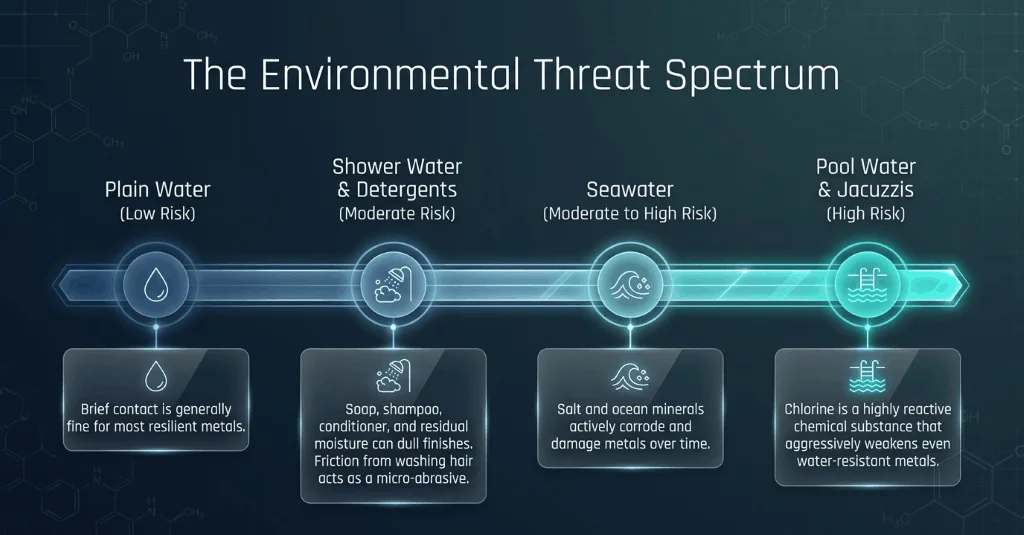
- Saltwater damage: the salt and minerals in ocean water can also damage metals over time, though differently than pool chemicals.
Whether you’re looking for the best jewelry for the pool or you prefer ocean swims, the safest choice is always to take off valuable jewelry before getting in the water.

Does Truly Waterproof Jewelry Exist?
Chlorine & Chemical Resistance by Material
99% Resistance
85% Resistance
80% Resistance
20% Resistance
“Waterproof jewelry” usually means a piece can come into contact with water without immediate damage. But plain water and pool water are very different environments — chlorine is a chemically active substance that can weaken even water-resistant metals with prolonged exposure. As GIA notes:
Fine jewelry should be removed before diving into a chlorinated swimming pool.
Can Gold-Plated Jewelry Be Waterproof?
To some extent, and briefly — yes, but not permanently. Gold plating is usually a very thin layer over a base metal, and repeated exposure to water, sweat, or chemicals gradually wears that layer down, eventually exposing the metal underneath. The wear isn’t always immediate, but over the long run it’s nearly unavoidable.
Why Is Solid Gold the Safer Choice?
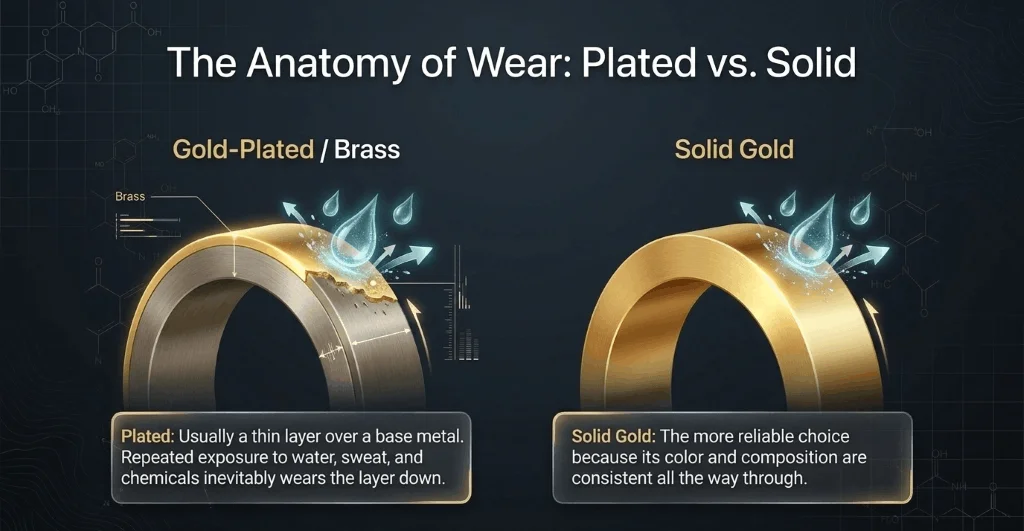
Solid gold is the more reliable choice for daily wear because its color and composition are consistent all the way through, not just on a surface layer. That doesn’t mean it’s indestructible — even solid gold can undergo minor changes with prolonged exposure to chlorine or saltwater.
Best Jewelry for Showering Every Day
Water isn’t the only issue with showering. Soap, shampoo, conditioner, and even residual moisture on skin can all gradually affect jewelry. Friction from washing hair or your body is also an often-overlooked factor that can abrade and dull a metal’s surface. So even a water-resistant piece may not hold up the same way against the combination of water and everyday chemicals.
Jewelry You Can Shower With
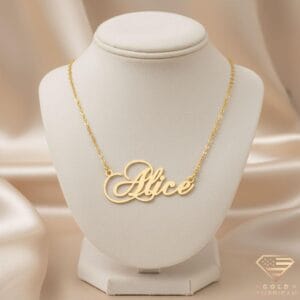
- Solid Gold: its uniform composition throughout holds up well to daily contact with water and soap. A solid gold gold name necklace can be a meaningful everyday piece, combining personalization with the durability of genuine gold. However, even high-quality gold jewelry should be protected from unnecessary chlorine and chemical exposure.
- Platinum: highly resistant to moisture, soap, and shampoo, and won’t tarnish over time.
- Titanium: lightweight and highly resistant to the mild chemicals in personal-care products.
- Stainless Steel 316L: an affordable option that holds up well to daily moisture and friction.
- Quality PVD-coated jewelry: PVD coating has better adhesion and wear resistance than standard plating.
Jewelry Better Removed Before Showering
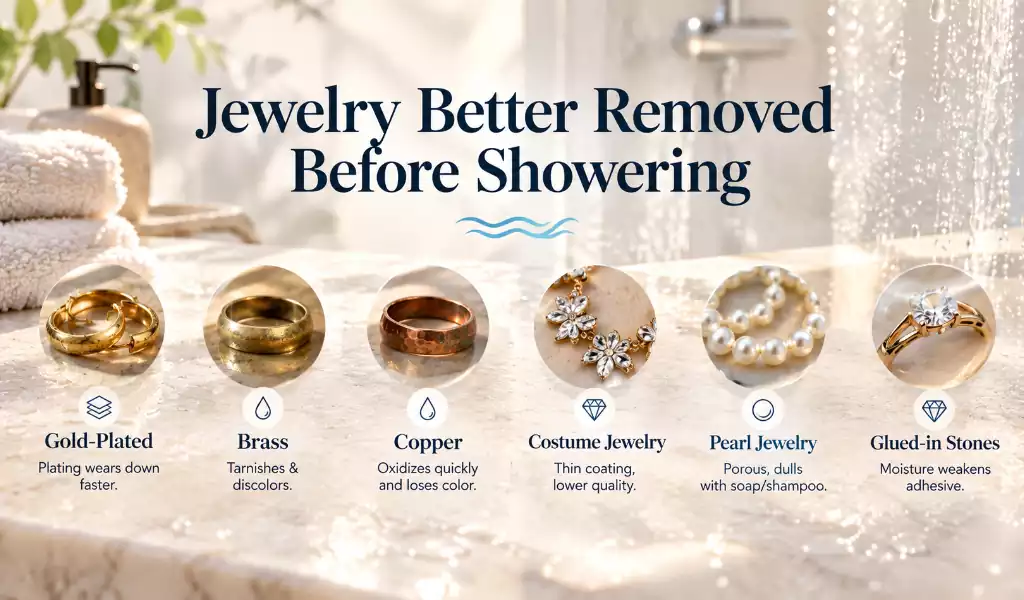
- Standard gold-plated pieces: the thin plating wears down faster with repeated water and shampoo exposure.
- Brass: prone to tarnishing and discoloration from moisture and chemicals.
- Copper: oxidizes quickly in moisture and loses its color.
- Costume jewelry: usually has a thin surface coating and lower overall quality.
- Pearl jewelry: pearls are porous, and soap or shampoo can dull their luster.
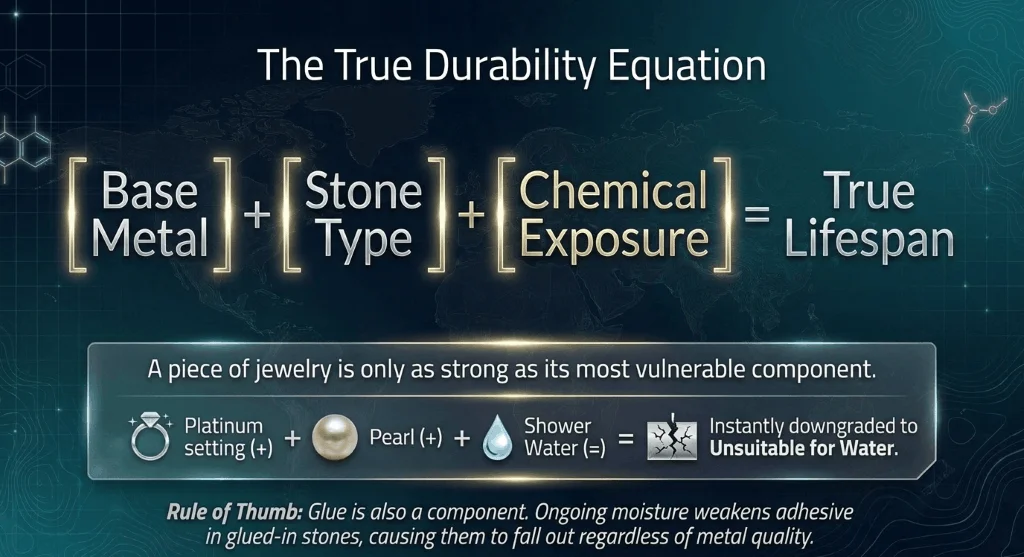
- Jewelry with glued-in stones: ongoing moisture can weaken the adhesive and cause stones to fall out.
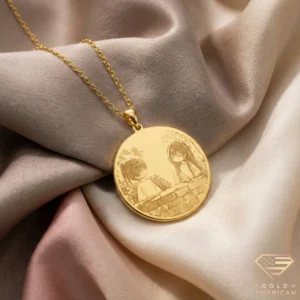
If you’re looking for a piece you can genuinely shower with every day without worry, Gold American’s 14k gold personalized jewelry is one of the safest bets — check out Gold American’s solid gold necklace collection for everyday wear.
Sterling silver remains a classic, budget-friendly choice, but frequent exposure to humidity, shower gels, and water speeds up tarnishing compared to solid gold. If you wear pieces from our Sterling Silver Jewelry collection, taking them off before showers will keep them bright and tarnish-free much longer.
What Jewelry Can You Wear in the Pool?
In general, it’s best to remove your jewelry before getting into a pool — but if you do keep some on, here’s how each type holds up:
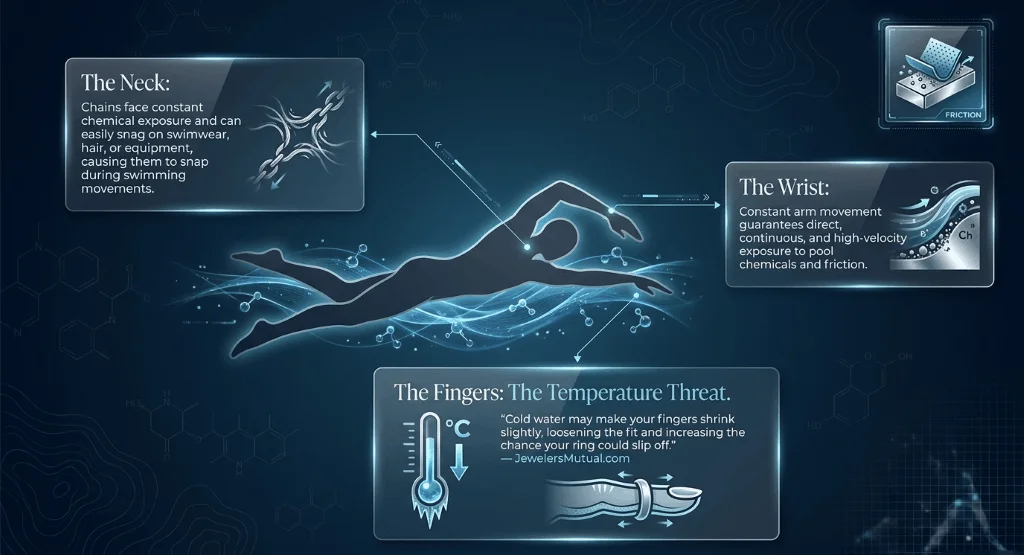
- Necklace: even simple necklaces face constant chlorine exposure, and chains can snag or snap during swimming movements. Personalized styles such as a gold initial necklace are popular for daily wear because they offer a simple design with personal meaning. To keep the piece looking its best, removing it before swimming is still recommended.
- Ring: cold pool water makes fingers shrink, sharply increasing the risk of a ring slipping off and getting lost — one of the most common ways jewelry goes missing.
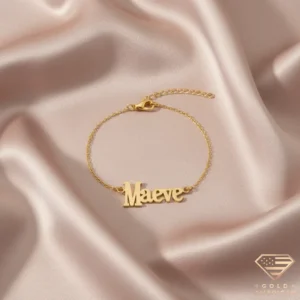
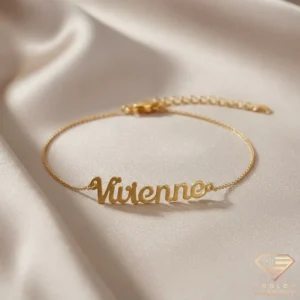
- Bracelet: because of constant hand movement while swimming, bracelets see more direct, continuous exposure to pool chemicals than other pieces.
- Earrings: also exposed to chemical contact, and some styles can catch on hair or swim goggles.
- Anklet: vulnerable to both chlorine and friction from direct contact with water, the pool edge, and leg movement.
According to jewelersmutual.com:
Cold water may make your fingers shrink slightly, loosening the fit and increasing the chance your ring could slip off.
Which Jewelry Stones Are Safe in Water?
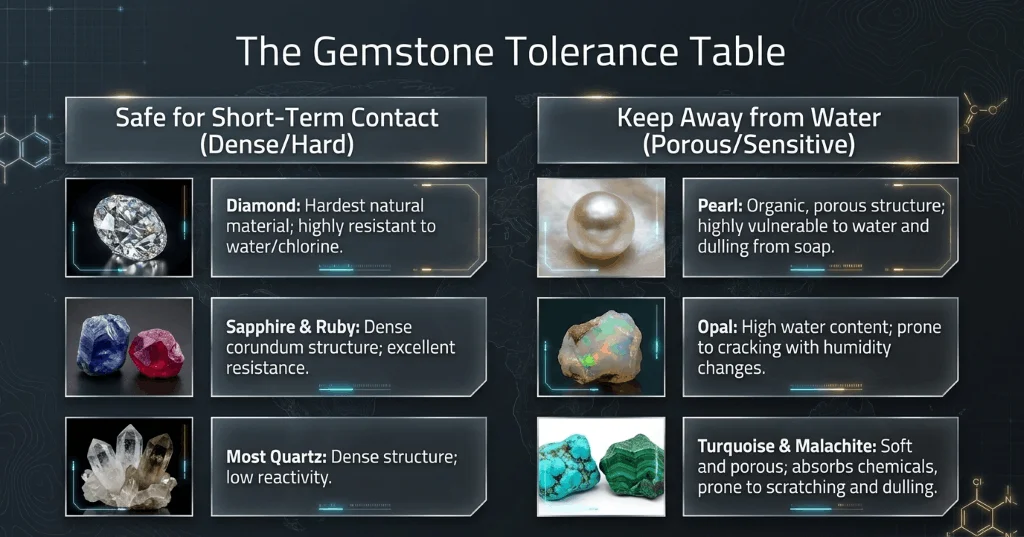
An often-overlooked point: the type of stone can matter more than the metal itself. Even a piece made of a highly durable metal like platinum or titanium isn’t suited for swimming or frequent water contact if it’s set with a delicate stone.
Fine for Short-Term Contact
- Diamond: the hardest natural material, highly resistant to water and chlorine.
- Sapphire & ruby: dense corundum structure, similar resistance to diamond.
- Most quartz varieties: dense structure, low reactivity to brief water contact.
More Sensitive — Keep Away from Water
- Pearl: organic, porous structure, vulnerable to water and soap.
- Opal: high water content in its structure, prone to cracking with humidity changes.
- Turquoise: porous, absorbs chemicals and surrounding color.
- Malachite: soft and porous, prone to scratching and dulling.
- Porous stones in general: prone to absorbing moisture and chemical damage.
What Kind of Jewelry Can You Wear in Water?
Jewelry Water Safety Guide
💧 Plain Water
Low Risk
Brief contact is usually fine
🚿 Shower
Moderate Risk
Remove when possible
🏊 Pool
High Risk
Avoid chlorine exposure
🌊 Ocean
Moderate–High Risk
Remove valuable pieces
Risk level varies by water type:
| Water Type | Risk Level | Recommendation |
| Plain water | Low | Brief contact is fine |
| Shower water | Moderate | Remove if possible |
| Pool water | High | Remove |
| Seawater | Moderate to high | Remove |
| Jacuzzi | High | Remove |
| Water with detergents | Moderate | Remove |
Need Expert Advice on Your Next Jewelry Purchase?
Our specialists at Gold American are here to help you find the perfect, durable everyday piece.
How to Choose the Best Jewelry for Water
Before evaluating how your jewelry handles pool chlorine or ocean salt, make sure your piece is made of genuine metal. Base metals and cheap imitations corrode rapidly when exposed to moisture; learn how to verify your metal’s authenticity with our guide on How do i know my gold is real or fake?.
- What’s the base metal? Titanium, platinum, and 316L steel offer higher resistance.
- Is it solid gold or plated? Solid gold is uniform all the way through; plating wears down over time.
- Does it use PVD coating? PVD has better adhesion and durability than standard plating.
- Is it nickel-free? Important for avoiding skin sensitivity with prolonged moisture exposure.
- Does the brand offer a warranty? A sign of confidence in the product’s quality and durability. For everyday pieces that carry personal meaning, many buyers prefer personalized gold jewelry because the design is made specifically for them. Choosing a durable material is especially important when a piece is something you plan to wear often.
- What exactly does “waterproof” mean here? Some brands only mean resistance to ordinary moisture, not chlorine or saltwater.
- Are the stones water-safe? Stones like pearl or opal can make even the most durable metal piece unsuitable.
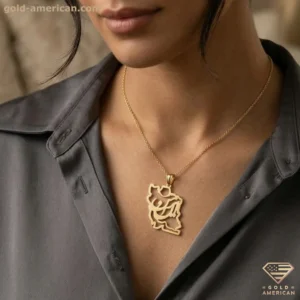
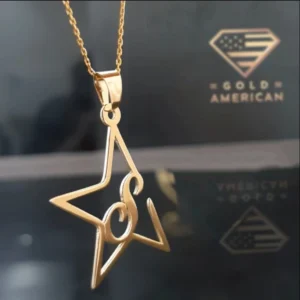
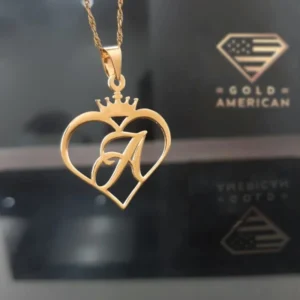
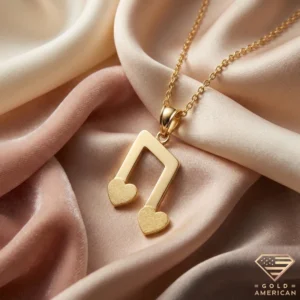
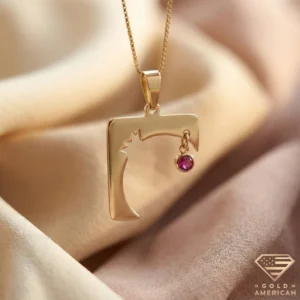
If you’re looking for something that checks these boxes, Gold American’s 14K solid gold is a solid choice — like the Saba Geometric Gold Name Necklace and Infinity Duo Initial Gold Necklace, both in solid 14K gold with no surface plating.

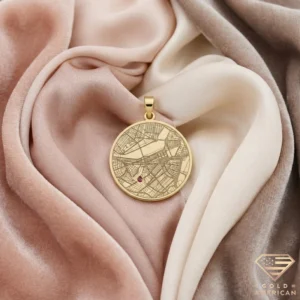
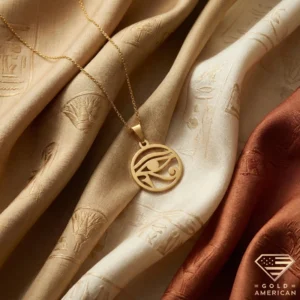
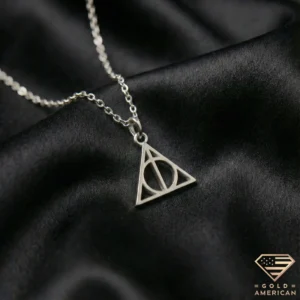
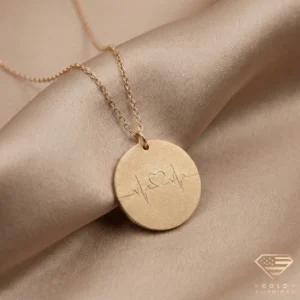
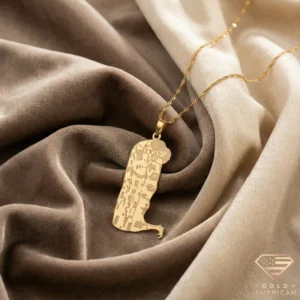
The Day I Sacrificed My Necklace to the Pool
Last summer, at a pool party, I was holding my 14K gold necklace in my hand and thought, “eh, it’s solid gold, nothing will happen to it” — and jumped in the water. I kept swimming with it on for weeks, until one day I noticed the clasp had gone slightly dull. The jeweler told me it was chlorine damage, and that it happens to a lot of gold pieces.
Ever since, I take my jewelry off and put it in a little pouch before I get anywhere near a pool. It takes a few seconds, but it beats watching something you love slowly get ruined over a few months.
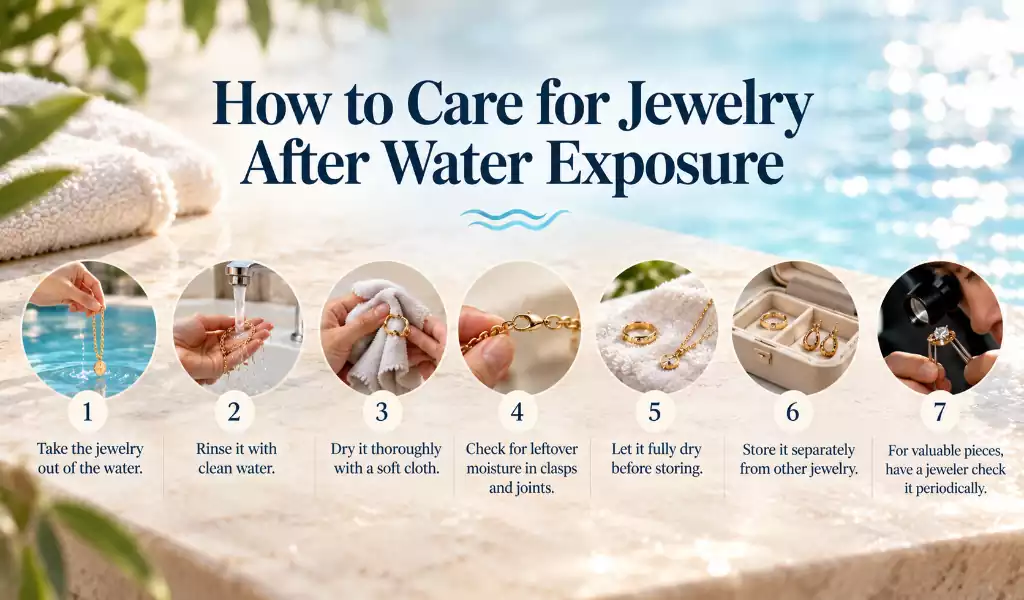
How to Care for Jewelry After Water Exposure
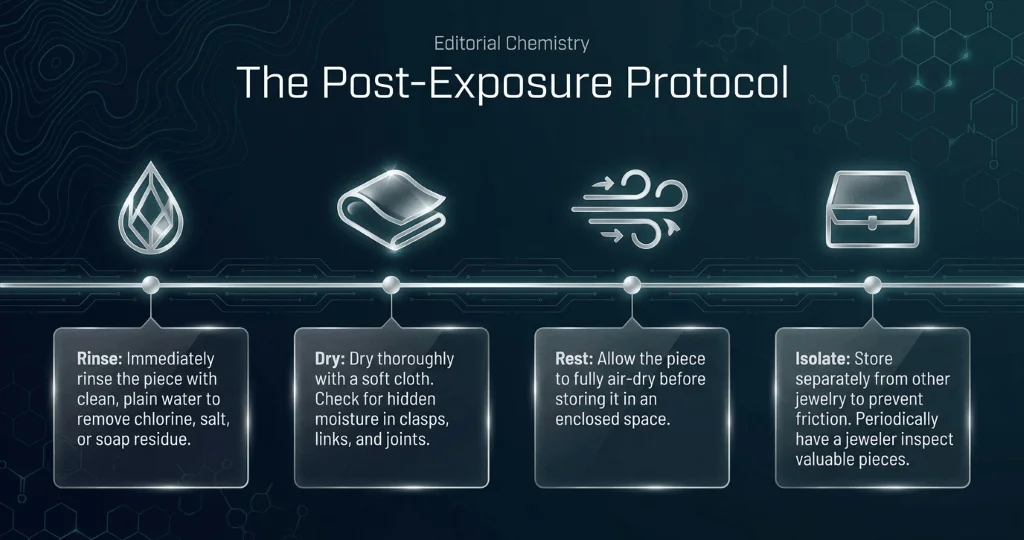
- Take the jewelry out of the water.
- Rinse it with clean water.
- Dry it thoroughly with a soft cloth.
- Check for leftover moisture in clasps and joints.
- Let it fully dry before storing.
- Store it separately from other jewelry.
- For valuable pieces, have a jeweler check it periodically.
Conclusion
Ultimately, no piece of jewelry is completely and permanently safe from water and chemicals — what differs is how resistant it is and how fast damage sets in. For everyday wear, 14K solid gold remains one of the most balanced choices for durability and appearance, but for high water-contact activities like swimming, metals like titanium, platinum, or 316L stainless steel perform better.
The key takeaway is that “waterproof” isn’t the same as “resistant to chlorine and chemicals,” and the type of stone set into a piece can matter as much as — or more than — the metal itself. The simplest, safest approach remains: take off valuable jewelry before swimming, long showers, or contact with detergents, and store it somewhere safe.
Choose Jewelry Made for Everyday Wear
Looking for durable personalized gold jewelry?
Our team can help you choose the right material, design, and customization option for your lifestyle.
📞 +1 (888) 970 2242
Frequently Asked Questions About Jewelry and Water
1. Can I shower with my 14K solid gold necklace every day?
Yes, 14K solid gold is highly durable and handles daily showers very well because its composition is consistent throughout. However, soap, shampoo, and body washes can leave a residue that dulls the gold’s shine over time. It is perfectly safe, but you should occasionally clean it with mild soap and warm water to restore its sparkle.
2. Will pool chlorine permanently damage my solid gold rings?
While a quick, accidental dip won’t instantly destroy your jewelry, prolonged or frequent exposure to chlorine is harmful. Chlorine reacts aggressively with the alloys (like copper and silver) mixed into solid gold. Over time, this chemical reaction can cause discoloration, dull the finish, and even weaken the structural integrity of prongs holding your gemstones.
3. If my jewelry says “waterproof,” does that mean it’s safe for the ocean and pool?
Not necessarily. In the jewelry industry, “waterproof” usually means water-resistant against plain tap water or sweat. Pool chlorine and ocean salt are entirely different, harsher environments. If your piece is gold-plated or PVD-coated, regular exposure to these chemicals will eventually eat through the plating and ruin the jewelry.
4. Why is it a bad idea to wear rings in the pool or ocean?
Aside from the chemical damage caused by chlorine and salt, the biggest risk is losing your valuable piece. Cold water causes your fingers to shrink slightly. This change in ring size makes it surprisingly easy for a loose ring to slip off unnoticed while you are swimming, which is one of the most common ways fine jewelry is lost.
5. My ring is made of platinum, which is highly water-resistant. Is it safe to swim with?
It depends entirely on the gemstone. While platinum and titanium handle water beautifully, porous stones like pearls, opals, turquoise, and malachite do not. They absorb chemicals and moisture, which can permanently ruin their color, dull their luster, or even cause them to crack. Always check the stone’s durability before getting it wet.
