

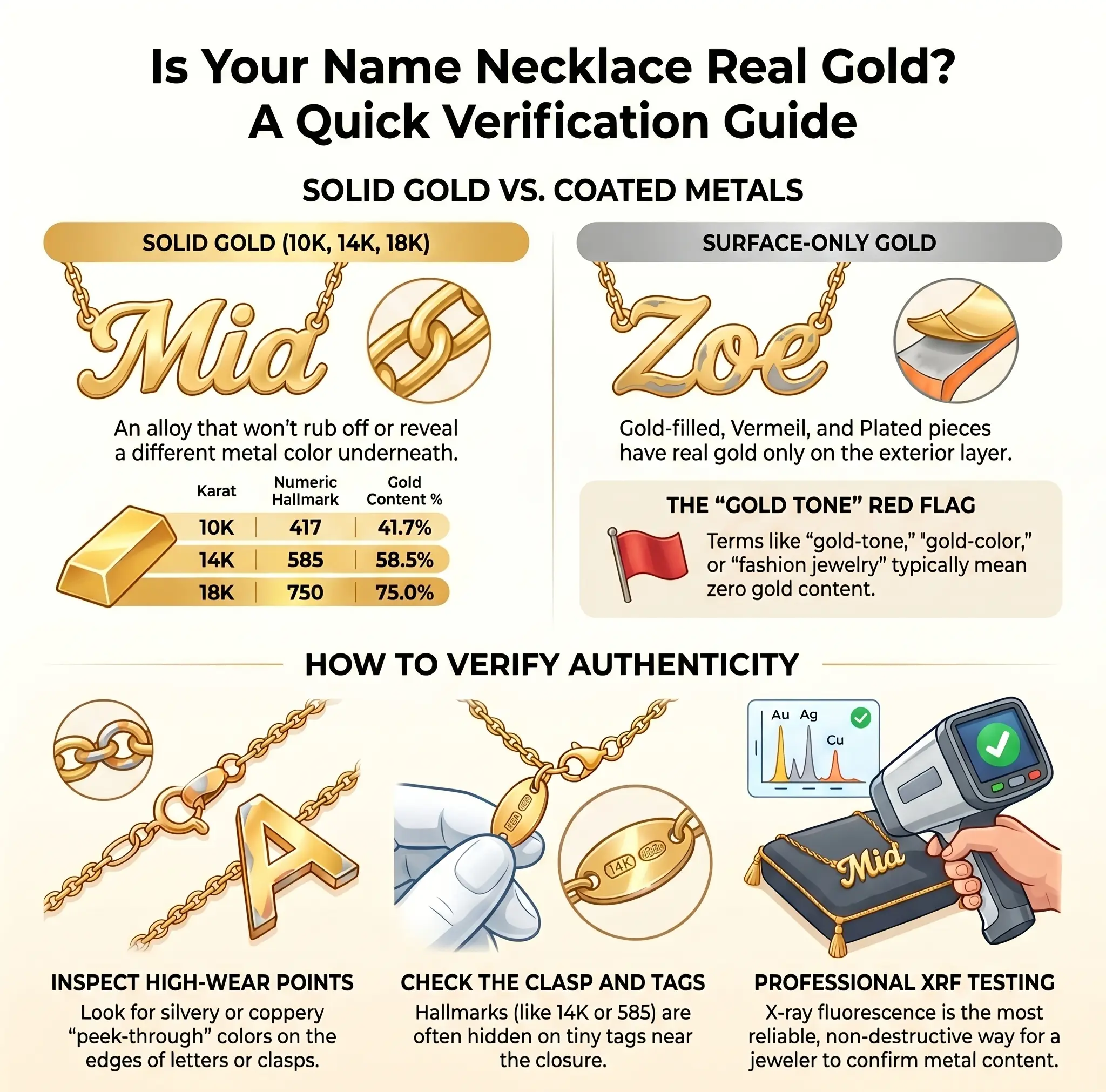
Usually refers to solid gold jewelry made from 10K, 14K, or 18K gold alloys.
Look for stamps like 417, 585, 750, 10K, 14K, or 18K.
May be gold-tone, imitation, plated, or gold-colored jewelry.
Check hallmarks, color consistency, wear points, and seller details.
Just because a piece of jewelry looks like gold doesn’t mean it’s made from solid gold. Some options contain real gold, while others simply mimic its appearance. The table below explains the most common types.
| Jewelry Type | Contains Real Gold? | Description |
|---|---|---|
| Gold-Plated Jewelry | ✅ Yes | Base metal coated with a thin layer of real gold |
| Gold-Filled Jewelry | ✅ Yes | Base metal bonded with a thicker layer of real gold |
| Gold Vermeil | ✅ Yes | Sterling silver coated with real gold |
| Gold-Tone Jewelry | ❌ Usually No | Jewelry made to look like gold through color or finish |
| Gold-Colored Jewelry | ❌ Usually No | Jewelry with a gold-like appearance |
| Imitation Gold Jewelry | ❌ No | Jewelry designed to mimic real gold |
| Faux Gold Jewelry | ❌ No | Another term for imitation gold jewelry |
| Solid Gold Jewelry | ✅ Yes | Genuine gold alloy such as 10K, 14K, or 18K |
Table Of Contents
Which type of gold jewelry is right for you? If you’re looking for a low-cost fashion accessory, gold-tone, imitation gold, or gold-plated jewelry may be enough. For everyday wear, gold-filled jewelry offers better durability, while gold vermeil provides a higher-quality precious metal base. If longevity, resale value, and long-term wear are your priorities, solid gold jewelry remains the premium choice.
| Jewelry Type | What It Means | Main Benefit | Best For |
|---|---|---|---|
| Gold-Plated Jewelry | Base metal covered with a thin layer of gold | Affordable gold look | Fashion jewelry, occasional wear, budget-conscious shoppers |
| Gold-Filled Jewelry | Base metal bonded with a thicker gold layer | Better durability and value | Everyday wear at a lower cost than solid gold |
| Gold Vermeil | Sterling silver covered with a gold layer | Precious metal base and premium appearance | Sensitive skin, affordable luxury, gift jewelry |
| Gold-Tone Jewelry | Jewelry colored to look like gold, often with no real gold | Very low cost | Trend-based accessories and short-term fashion |
| Imitation Gold Jewelry | Jewelry designed to mimic real gold | Inexpensive alternative | Costume jewelry and occasional use |
| Faux Gold Jewelry | Another term for imitation gold jewelry | Affordable and widely available | Fashion accessories and statement pieces |
| Gold-Colored Jewelry | Any jewelry with a gold-like color | Decorative appearance | Low-cost accessories and non-precious jewelry |
| Solid Gold Jewelry | Real gold alloy such as 10K, 14K, or 18K | Long-lasting value and durability | Fine jewelry, heirloom pieces, meaningful gifts, and daily wear |
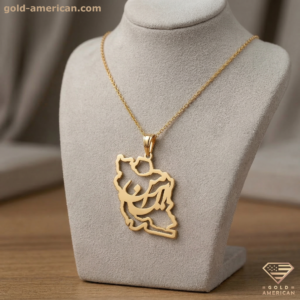
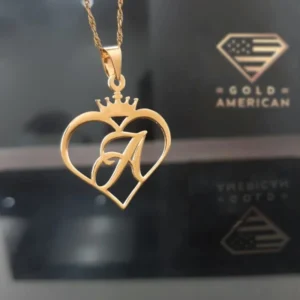
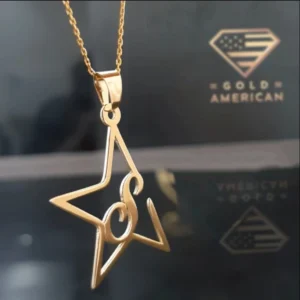
At Gold American, all products are available in solid gold options, including 14K gold. If you prefer a more affordable alternative, you can also select gold vermeil from the product options where available. This allows you to choose the material that best fits your budget, style, and long-term wear expectations.
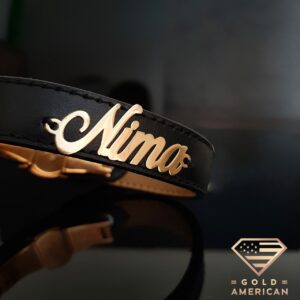
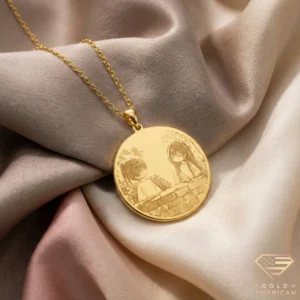
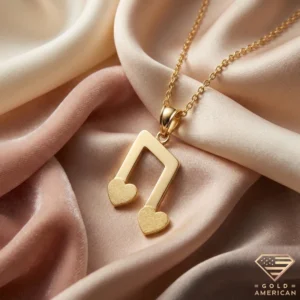

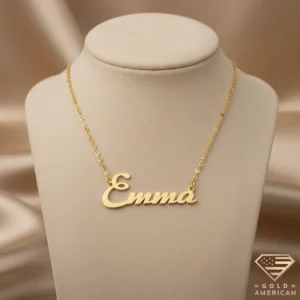

Real gold vs Fake gold
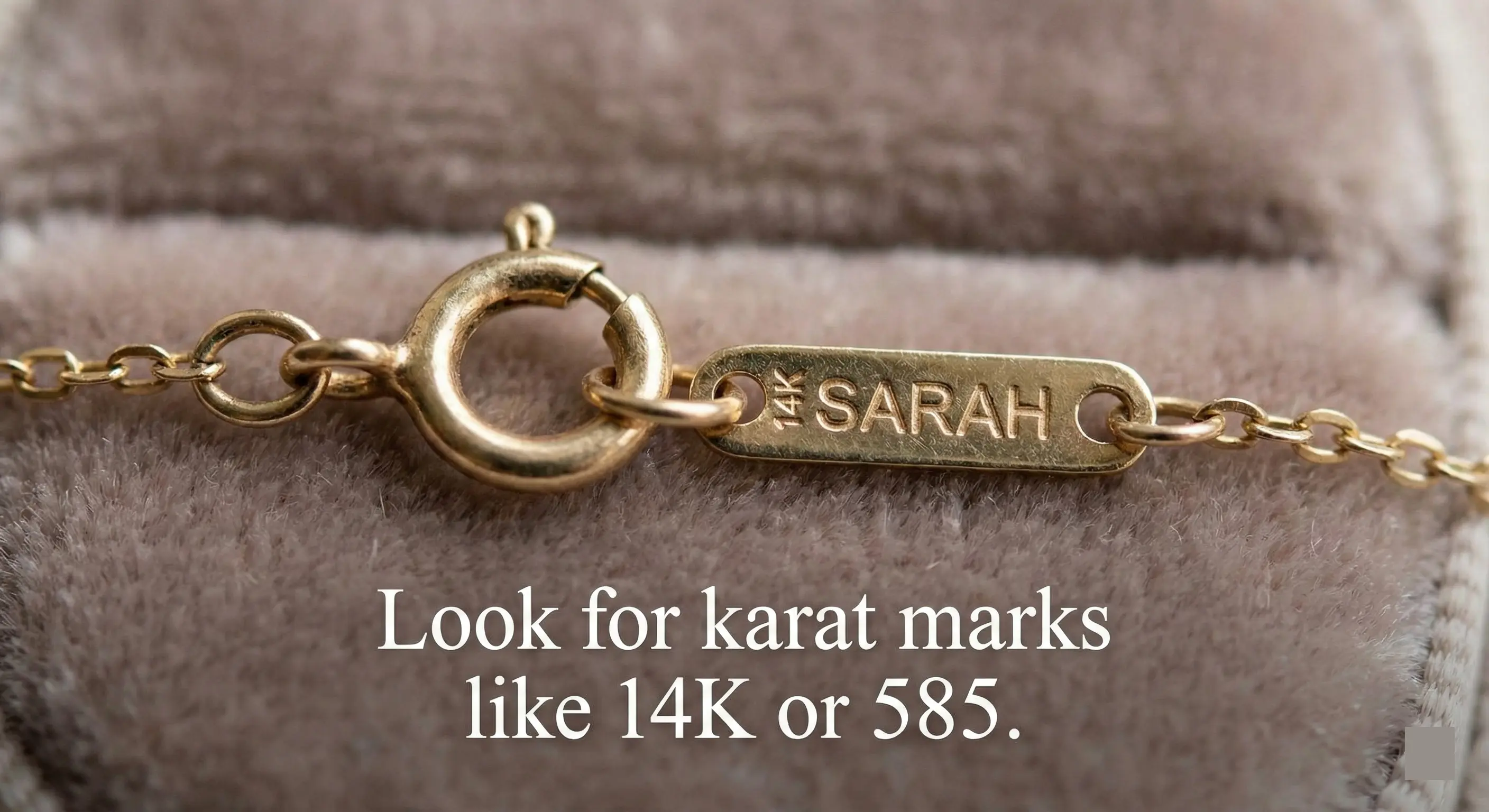
How do I know if my gold is real or fake? If a name necklace is solid gold, it should be clearly described as 10K/14K/18K gold (not just “gold”), and it often has a stamp like 14K or 585 (14K = 58.5% gold). If it says gold plated, gold vermeil, or gold filled, it contains real gold on the surface but it’s not solid gold and will wear differently over time. If the listing is vague (“gold tone,” “gold color,” “fashion jewelry”) or the seller won’t state the base metal and return policy, treat it as high-risk.
How to tell if a necklace is real gold:
- Look for stamps: 10K/14K/18K, 375/585/750, or “Au”. (No stamp = not proof, but a red flag.)
- Magnet test: Real gold is not magnetic. If it strongly sticks, it’s not gold.
- Color wear test: Check edges/clasp—if you see a different metal color underneath, it’s plated.
- Skin reaction: Green/black marks can mean base metals (not always, but common).
- Best confirmation: A jeweler can test it (acid test/XRF) in minutes.
What “real gold” actually means for name necklaces
“Real gold” is one of those phrases that sounds simple until you shop online.
In jewelry, “real gold” can mean:
- Solid gold alloy (like 14K): gold mixed with other metals for strength
- Gold-filled: a thick layer of gold bonded to a base metal
- Vermeil: gold plating over sterling silver
- Gold plated / electroplated: a thinner gold layer over a base metal
These are not “good vs bad.” They’re just different products with different durability, price, and care needs.
Personalized gold jewelry is often made to celebrate meaningful moments, so choosing the right metal matters. Whether you’re customizing a name necklace, initials, or a special gift, understanding the difference between solid gold, vermeil, and plated jewelry can help you select a piece that matches both your budget and how long you want it to last
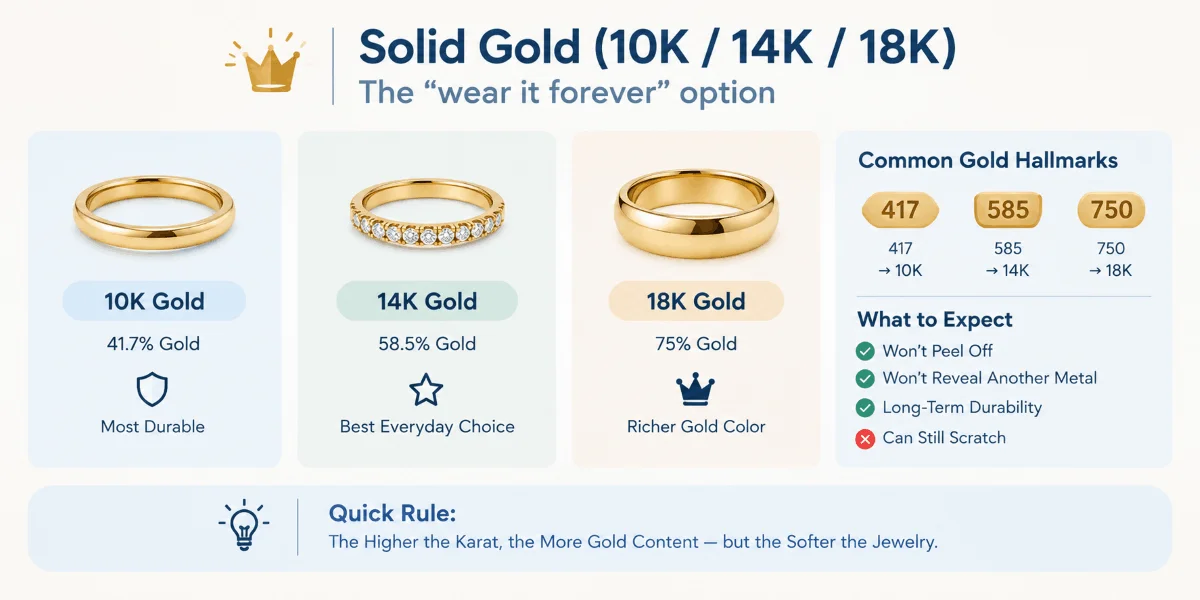
Solid gold (10K/14K/18K): the “wear it forever” option
Solid gold jewelry is not pure 24K gold most of the time. Pure gold is very soft, so jewelry is typically made as an alloy (gold + other metals).
- 10K = 10/24 gold (durable, more alloy content)
- 14K = 14/24 gold (very popular for everyday jewelry)
- 18K = 18/24 gold (richer color, softer than 14K)
You’ll also see numeric fineness marks:
- 417 ≈ 10K
- 585 ≈ 14K
- 750 ≈ 18K
These “parts per thousand” style marks are widely used internationally, and 14K is commonly represented as 585.
What to expect: Solid gold doesn’t “rub off.” It can scratch (all fine jewelry can), but the color won’t suddenly reveal a different metal underneath.
If you’ve confirmed that your jewelry is genuine, the next step is understanding its gold purity. Knowing the difference between 10K and 14K gold can help you compare durability, value, and appearance before making a purchase. Read our 10K vs 14K Gold Guide to learn which option is best for your needs.
Gold-filled, vermeil, gold plated: real gold on the surface
These categories are where most confusion happens because they can look nearly identical in photos.
- Gold filled / gold overlay / rolled gold plate (RGP) typically means a layer of gold (at least 10K) mechanically applied to a base metal; markings may include the karat and sometimes a fraction such as “1/40 14K gold overlay.”
- Gold vermeil is a type of gold-plated jewelry with a sterling silver base.
- Gold electroplate and gold plated refer to gold applied on top of a base metal using processes like electroplating; the thickness can vary widely, and very thin coatings wear faster.
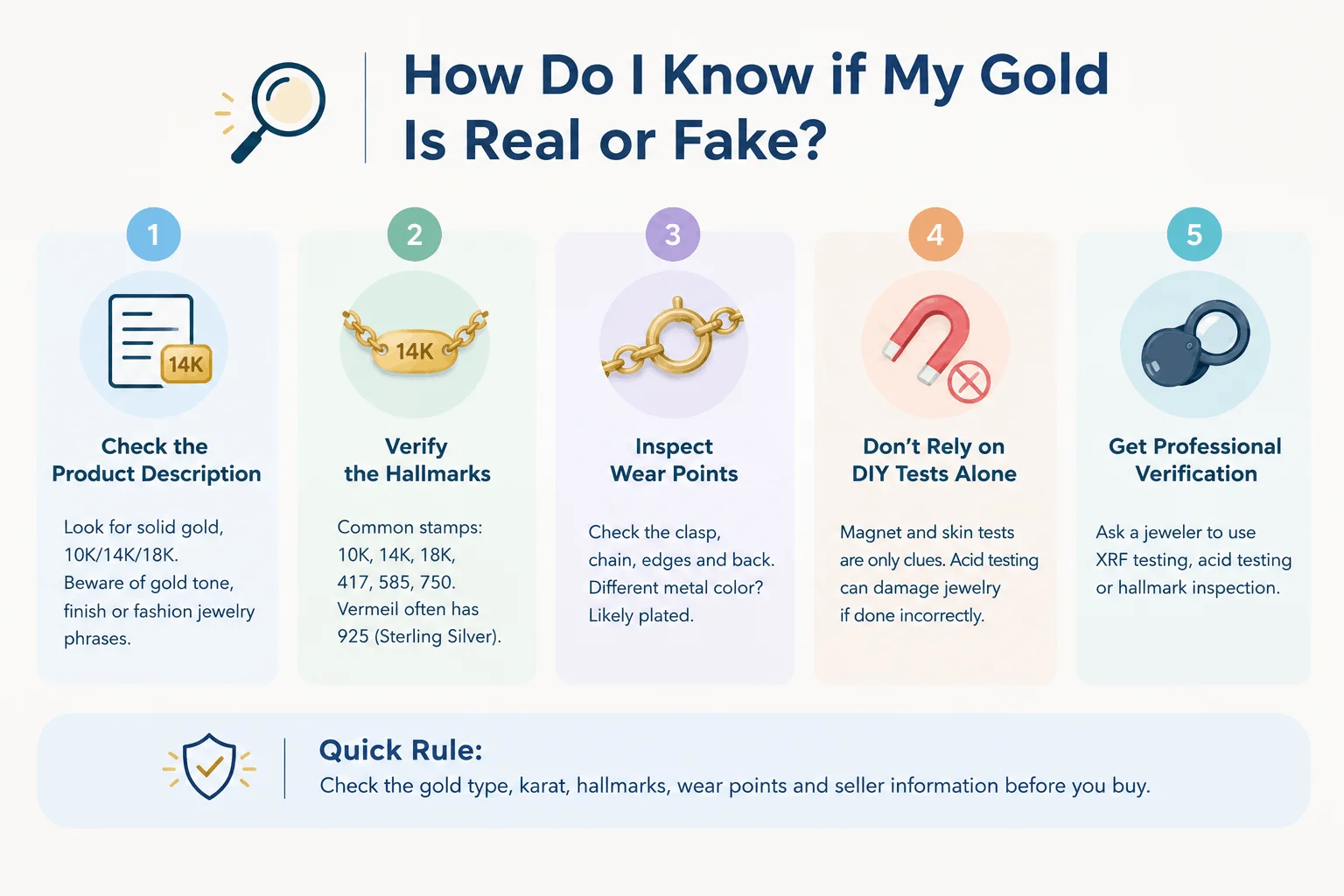
Step-by-step: How do i know my gold is real or fake?
🔍 Step 1 — Read the Product Wording (Spot the Loopholes)
Before you zoom into photos, read the product title and description like a detective.
- “Solid 14K gold name necklace”
- “14K gold (not plated)”
- “14K yellow gold” + weight, chain type, closure details
- “Gold tone / gold color / gold finish”
- “Gold dipped”
- “Fashion jewelry”
- “Hypoallergenic gold”
Before You Buy, Make Sure the Listing Includes:
Solid, Vermeil, Filled, or Plated
10K, 14K, or 18K
Silver, Stainless Steel, Brass, etc.
Important for custom jewelry
🏷️ Step 2 — Check Stamps & Hallmarks (What to Look For)
Many real pieces have stamps, but stamps aren’t a magic shield—fakes can be stamped too.
- 10K, 14K, 18K
- 417, 585, 750
- 925
- Sterling
👀 Step 3 — Look at Weight, Wear Points, and Color Changes
If you already own the necklace and you’re trying to confirm whether it’s real gold, start by examining the areas that experience the most friction and daily wear.
- Edges of letters (especially sharp script tips)
- Bail (where pendant meets chain)
- Clasp and connecting rings
- Back of the pendant (rubs against skin and clothing)
- Different color at high-contact points
- Darkening or tarnish around edges
- Silvery or copper-colored metal showing through
🧲 Step 4 — Use Safe At-Home Checks (And What Not to Trust)
There are a few home tests people love to recommend. Some can provide useful clues, but none should be treated as proof that gold is real.
- Magnet Test: Real gold isn’t magnetic, but many non-gold metals aren’t magnetic either.
- Skin Reaction Test: Some people react to nickel alloys, while others don’t react at all.
Touchstone and acid testing are commonly used by professional jewelers and gemologists to evaluate karat gold.
🧪 Step 5 — Confirm with a Jeweler Test (Best for Certainty)
If you need a definitive answer—especially before a return window closes—a professional jeweler can verify whether your gold jewelry is genuine.
- XRF (X-Ray Fluorescence) testing
- Professional acid testing
- Inspection of construction and hallmarks
- Fast and reliable results
- No guesswork involved
- Useful before return deadlines expire
- Ideal for online purchases
Red flags when shopping online
If you’re buying a custom name necklace (especially on marketplaces), watch for these:
- No base metal listed (what is it plated on?)
- “14K gold” in one line, “plated” in another
- Too-good-to-be-true pricing for “solid 14K” with heavy-looking photos
- No close-up photos of clasp/tag/stamp
- No clear return/remake policy for custom items
- Seller refuses to answer simple questions (weight, thickness, base metal)
Also, if the necklace is meant for a child, be extra careful with ultra-cheap jewelry. Consumer safety agencies have repeatedly recalled children’s jewelry for unsafe heavy metals, which is one reason we recommend choosing reputable sellers and known materials. According to testing conducted by the U.S. Consumer Product Safety Commission (CPSC),
Testing by CPSC staff indicates that there is no clear relationship between the extractability of cadmium from children’s metal jewelry or other metal items and the cadmium content of items. Therefore, at this time, the available data indicate that measuring soluble cadmium under conditions including the processes described above may be the most appropriate method for determining whether a product may be considered a hazardous substance. Source
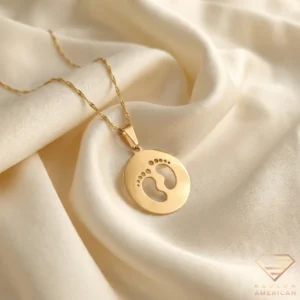
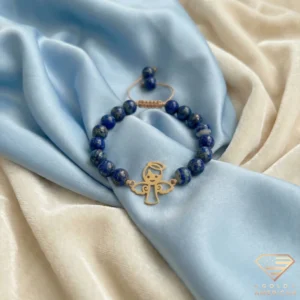
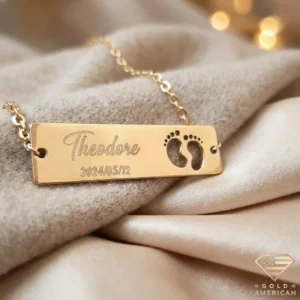
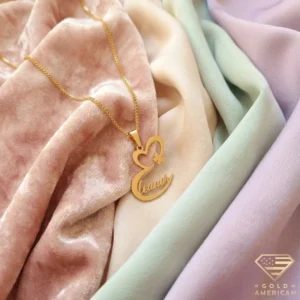
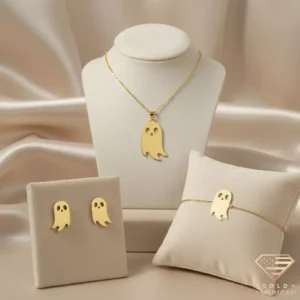
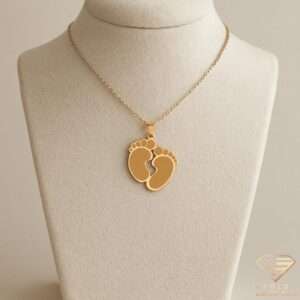
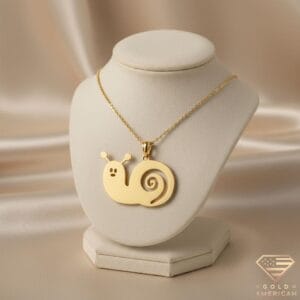
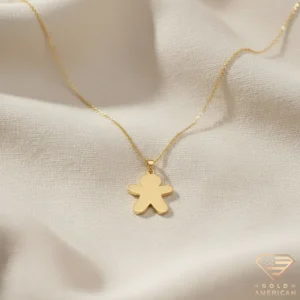
If you’re shopping for Gold Jewelry for Kids, it’s worth paying close attention to the materials used. Many inexpensive children’s jewelry pieces are made from unknown metals or plated materials, while solid gold offers long-lasting quality and transparency about what’s actually in the jewelry. That’s why we clearly identify the gold type and purity of every piece in our Gold Jewelry for Kids collection.
Common mistakes we see (and how to avoid them)
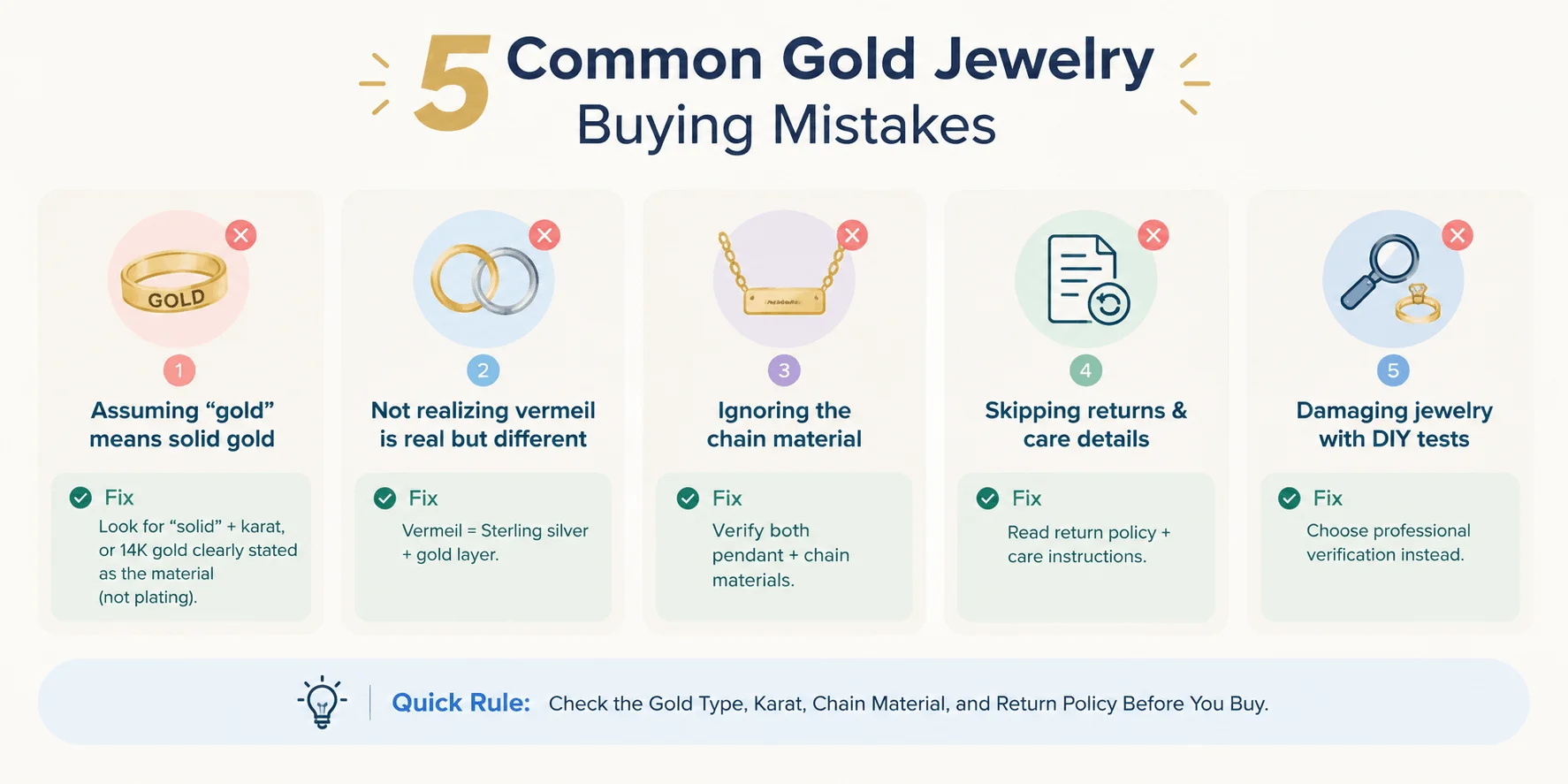
Mistake 1: Assuming “gold” means solid gold
Fix: Look for “solid” + karat, or “14K gold” clearly stated as the material (not plating). FTC consumer guidance explains how terms like gold filled and gold electroplate should be described.
Mistake 2: Not realizing vermeil is real but different
Fix: Vermeil can be a great choice (sterling silver base + gold coating), but it will wear differently than solid gold over years.
Mistake 3: Ignoring the chain
Fix: Some listings focus on the pendant material but use a cheaper chain. Make sure both the nameplate and chain materials are stated.
Mistake 4: Skipping the boring parts (returns + care)
Fix: Custom jewelry is personal. You want a clear remake policy if there’s a spelling issue, and care instructions that match the metal type.
Mistake 5: Using risky DIY tests on a piece you might return
Fix: If you might return it, don’t scratch it or acid-test it at home. Get a quick jeweler verification instead.
Trust & care notes (placeholders you can customize)
- Materials disclosure: We clearly list whether a piece is solid gold, vermeil, gold-filled, or plated plus the base metal.
- Shipping: less than 1 week, tracking included, signature option for high-value orders.
- Care basics: Avoid harsh chemicals; store separately; clean gently with a soft cloth. (Exact care depends on whether your piece is solid gold vs coated.)
Real Gold vs Fake Gold jewelry isn’t just about looks it’s about clear labeling, material truth, and how the necklace will wear over time. Start with the listing language, confirm stamps, avoid risky DIY tests, and use a jeweler verification when you need certainty.
Next step: pick one item you’re considering and run it through the 60-second checklist (metal type, karat, base metal, stamp photos, return policy). If any piece fails, keep shopping.
FAQs
- How do I know if my gold is real or fake?
Look for hallmarks such as 10K, 14K, 18K, 417, 585, or 750. Check high-wear areas for signs of a different metal underneath, and consider professional testing for the most reliable results. - Is 14K gold “real gold” or fake?
14K is real gold (an alloy). It’s widely used for fine jewelry and balances durability and color. - What does “585” mean on a necklace?
585 typically means 58.5% gold content, which corresponds to 14K gold. - Is gold vermeil real gold?
Vermeil contains real gold on the surface, but it’s a coating over sterling silver, not solid gold. Consumer Advice - What’s better for everyday wear: 14K solid gold or vermeil?
If you want maximum longevity with minimal worry (water, daily friction), solid 14K usually wins. Vermeil can be great with gentler wear and care. - Can fake jewelry have a 14K stamp?
Yes. Stamps can be faked. That’s why seller transparency, return policy, and (if needed) a jeweler test matter. - What does “gold filled” mean?
It generally describes jewelry with a layer of gold (at least 10K) applied to a base metal; markings may include karat and sometimes a fraction indicating gold content by weight. - Why does my “gold” necklace turn my skin green?
Often it’s base metal reacting with sweat/lotions, or the gold layer wearing thin. Skin reactions can also be linked to metal sensitivities (like nickel). - Does the magnet test prove gold is real?
No. Gold isn’t magnetic, but many non-gold metals also aren’t magnetic so it’s only a weak clue. - What’s the most accurate way to test gold jewelry?
A professional jeweler test (often XRF) is one of the most reliable and non-destructive options.