
| Necklace Length | Approx. Metric | Where It Sits | Use in Layering |
|---|---|---|---|
| 14 inches | 35.5 cm | Close, high on the neck | Very short layer or choker |
| 16 inches | 40.5 cm | Around the collarbone | First, delicate layer |
| 18 inches | 45.7 cm | At or just below the collarbone | Main, everyday layer |
| 20 inches | 50.8 cm | Below the collarbone | Middle layer or pendant necklace |
| 22 inches | 55.8 cm | Upper chest | Longer layer |
| 24 inches | 61 cm | Mid-chest area | Long layer, suited to larger pendants |
For most layered looks, combining 16, 18, and 20 inches is a practical starting point. Want more breathing room between the strands? Try 18, 20, and 22 inches, or go wider still with 16, 20, and 24 inches. Where a chain actually falls depends on more than the number on the tag neck size, body shape, chain type, and pendant size all play a part.
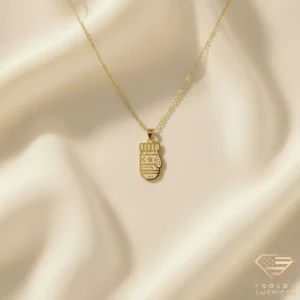
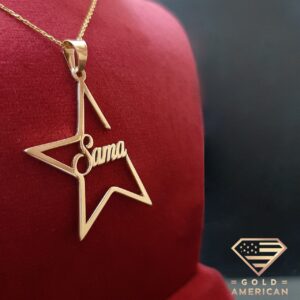
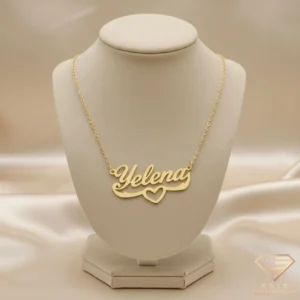
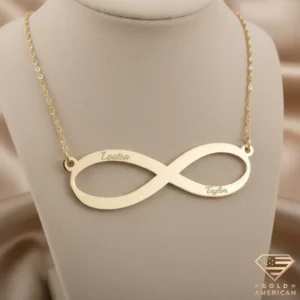

Where Does Each Necklace Length Sit?
Use this quick guide to compare common necklace lengths before building a layered look.
14 in
16 in
18 in
20 in
22 in
24 in
The same chain length can sit differently depending on neck size, body shape, chain style, and pendant size.
What Is the Best Necklace Length for Layering?
Where Will Your Necklace Sit?
14″ (35.5 cm) | Choker
Sits tightly at the base of the neck. Perfect as a very short top layer.
16″ (40.5 cm) | Collarbone
Wraps loosely around the base of the neck. The ideal starting point for a delicate stack.
18″ (45.7 cm) | Princess
Falls elegantly on the collarbone. The most popular everyday length and main layering base.
20″ (50.8 cm) | Matinee Base
Drops slightly below the collarbone. Great for small to medium pendants.
22″ – 24″ (55 – 61 cm) | Chest Level
Sits on the upper to mid-chest. The perfect anchor layer for large statement pendants.
Best necklace length for layering comes down to choosing several necklaces of different lengths so each one has its own place, rather than bunching into a single cluster on the neck.A typical three-layer look pairs one short chain, one medium chain, and one longer chain a 16-inch chain closest to the neck, an 18-inch chain in the middle, and a 20- or 22-inch chain finishing the set. What counts as the “right” length shifts from person to person. Neck size, height, body shape, neckline style, and pendant size all change where a necklace actually sits once it’s on.
If you want the shortest layer to sit higher and closer to the neck, it helps to understand how choker necklace length compares with standard 16- and 18-inch chains. Choker lengths can create a stronger separation between the first and second layers, especially when building a three-necklace stack.
Find the Right Length Before You Order
Not sure whether 16, 18, 20, or 22 inches will work best for your necklace or layered look? Contact Gold American for help with product specifications, necklace length, and styling options.
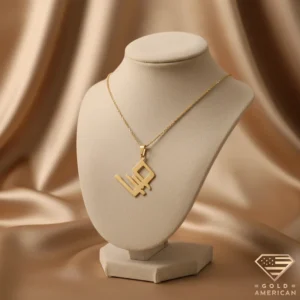
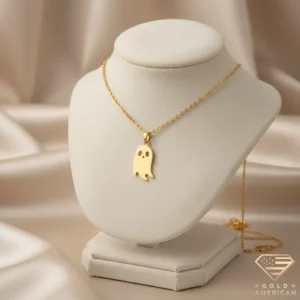
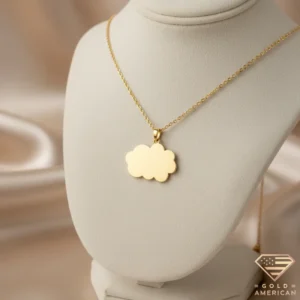
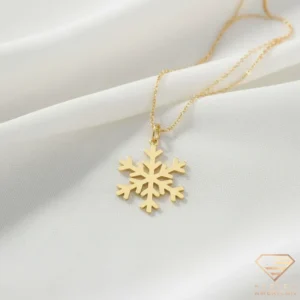
Necklace Layering Lengths: The Best Combinations
Top 3 Layering Combinations
A tight, delicate 2-inch gap between each chain. Perfect for minimalist and subtle daily wear.
Sits lower on the chest, giving more breathing room. Excellent for medium-sized pendants on the longest layer.
Creates massive vertical space. Ideal when pairing a very delicate choker with a bold, heavy statement piece.
When layering necklaces, the spacing between the chains is more important than simply having multiple necklaces of different lengths. If the lengths are too close to one another, the chains will overlap, and the layered effect will not be distinct.
1.16 + 18 + 20 Inches
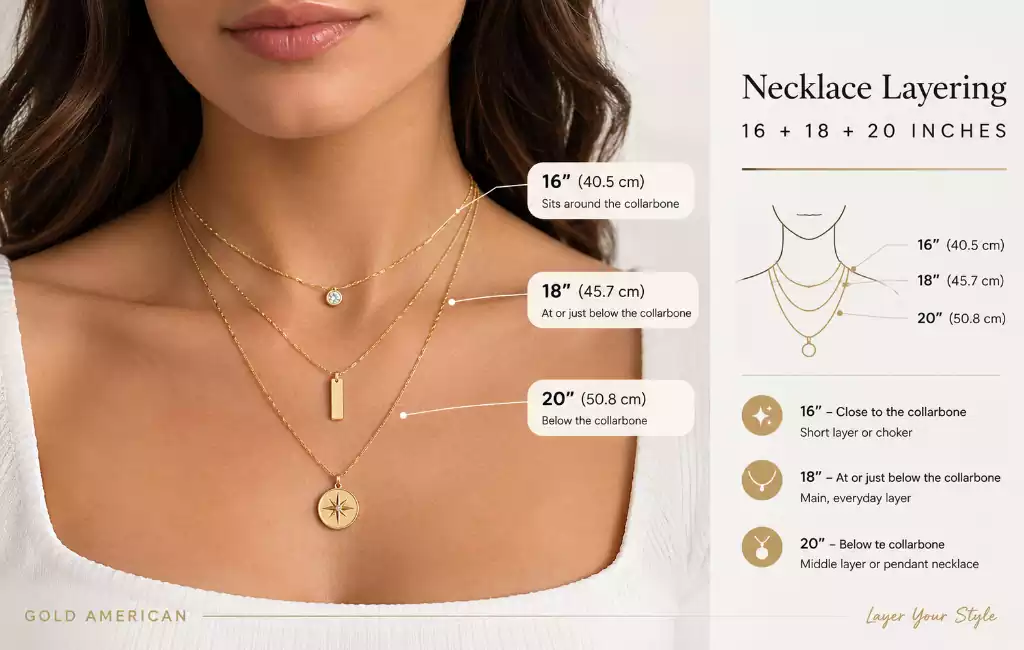
A go-to for a delicate, everyday layered look. The two-inch gap between each strand keeps the chains distinguishable rather than merging into one. Wear it with three simple chains, or pair a plain chain with a pendant necklace for contrast.
For a clean 16-18-20 stack, minimalist gold necklaces work especially well because each layer remains visible without adding too much visual weight. Simple chains and small pendants are also easier to combine when you’re new to necklace layering.
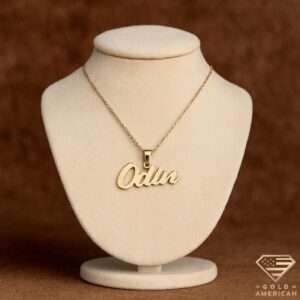
Personalized pieces can also work well as the focal point in a layered set. A gold initial necklace can sit at 18 or 20 inches while a simpler chain sits above it, helping the personalized element remain visible rather than getting lost between layers.
2.18 + 20 + 22 Inches
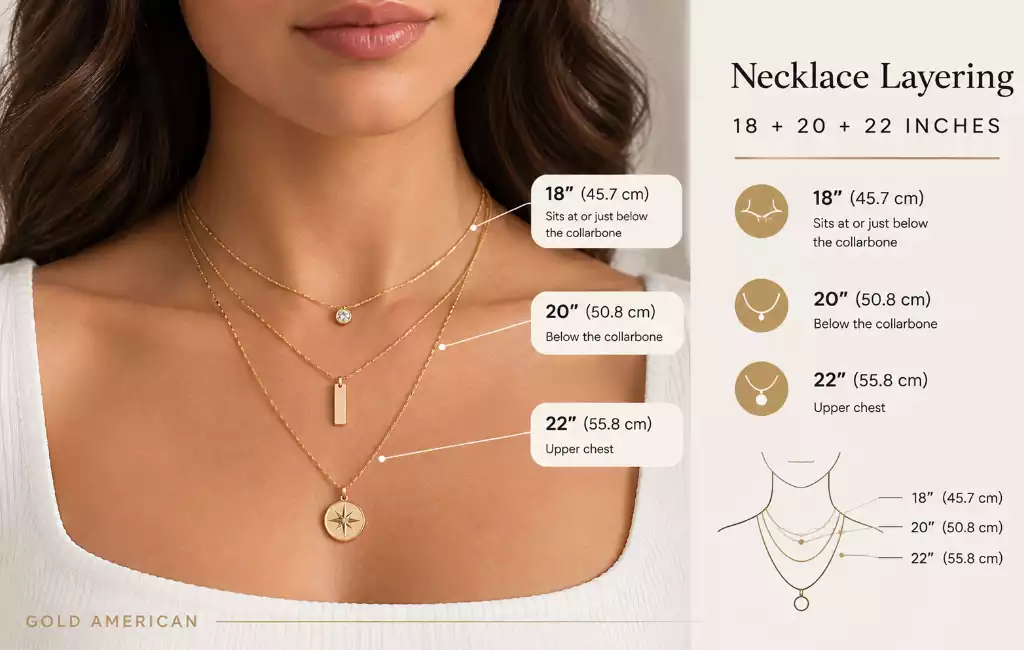
Prefer the necklaces sitting a touch lower? This combination keeps the spacing controlled while reading more open than 16-18-20. The 22-inch chain is often the right home for a medium pendant — just make sure its weight and size suit the chain’s thickness.
If one layer includes a pendant, leave enough vertical space for it to hang without colliding with the chains above. A gold pendant necklace often works well at 20, 22, or 24 inches, depending on the pendant size and where you want the focal point to sit.
3.16 + 20 + 24 Inches
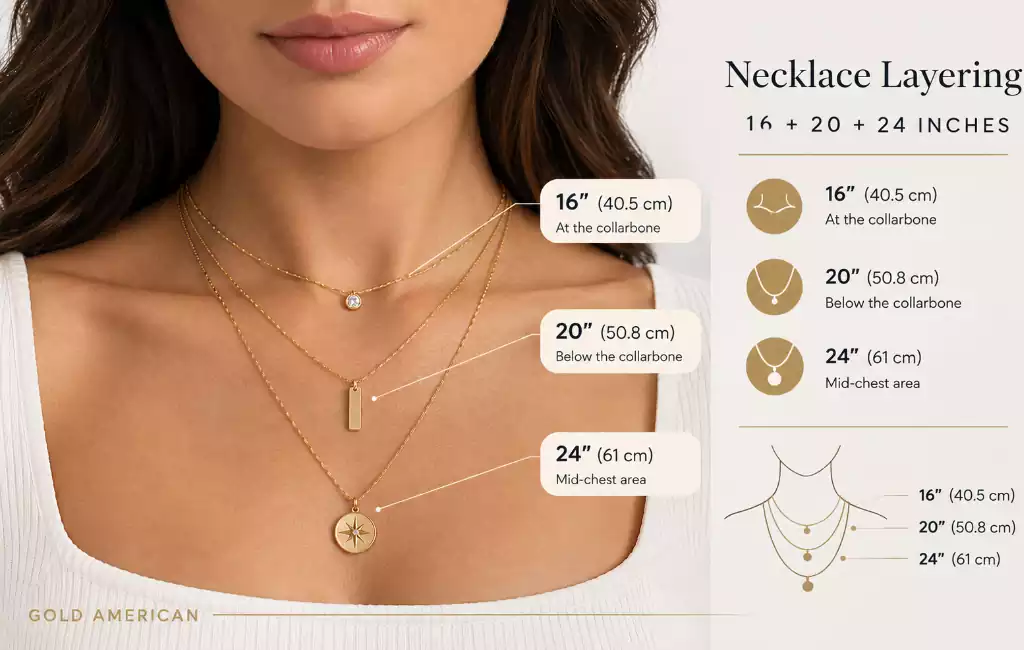
This pairing puts real distance between the shortest and longest layers, so each necklace gets clear visual space of its own. Try a delicate 16-inch chain, a simple 20-inch chain, and a 24-inch necklace carrying a pendant. Gold American’s own layering advice follows the same logic: pair a short chain, a medium chain, and a longer pendant piece for a combination that’s easy to build on.
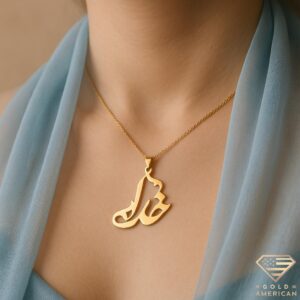
Wider spacing becomes especially useful when the longest layer carries a larger or personalized piece. A custom gold pendant at 22 or 24 inches can create a strong focal point while the shorter necklaces frame it from above.
How to Choose the Right Necklace Length for Layering
Before buying necklaces for a layered look, look past the number on the product page — the same length can read very differently on two people.
- Start with your neck size. On a wider neck, a 16-inch chain sits closer and shorter than it would on someone with a narrower neck.
- Pick your shortest layer first. This chain typically anchors the entire look.
- Leave room for the second layer. It shouldn’t sit directly on top of the first.
- Account for pendant size. Larger pendants need more space to hang properly.
- Check your neckline. The necklace shouldn’t compete awkwardly with it.
- Try it on first. A length of string or a soft tape measure can simulate the fit before you commit to a purchase.
Holding a chain or string against the intended spot before deciding is a simple step, but it’s one that saves a lot of guesswork.
Pendant size can affect the ideal chain length just as much as the necklace itself. If you’re unsure about the terminology, our guide to the difference between a necklace and a pendant explains how the chain and hanging element work together and why that matters when choosing a layering length.
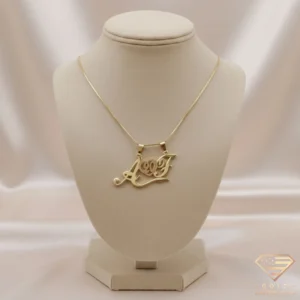
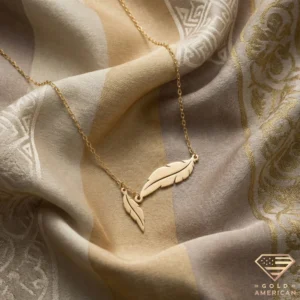
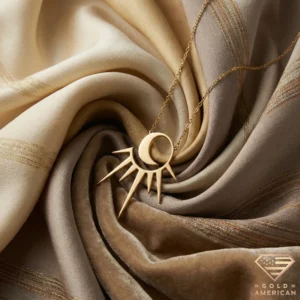
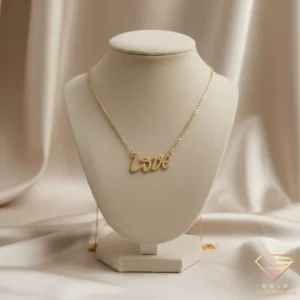
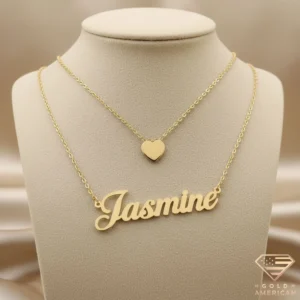
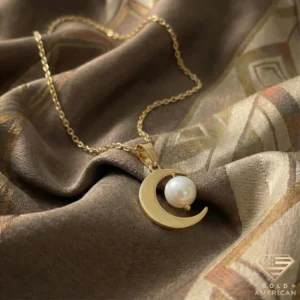
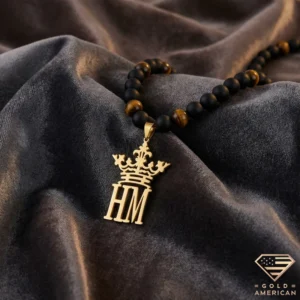
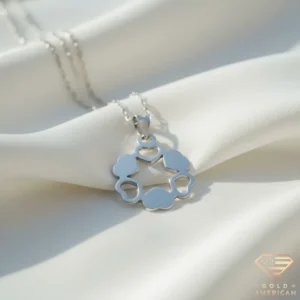
Best Necklace Length for Layering Gold
For best necklace length for layering gold, chain thickness and pendant size carry just as much weight as length itself. A very fine 16-inch gold chain works well as the layer closest to the neck. An 18- or 20-inch chain can take the middle spot, and if a pendant is involved, 20 to 24 inches gives it the room it needs.
The ideal layering setup also depends on the necklace style itself. Delicate chains, pendant styles, and heavier links can sit very differently even at the same length. Browse our gold necklaces to compare different styles that can work as short, middle, or long layers.
Not every layered set requires chains of dramatically different thickness, either — several delicate chains at varying lengths can work just as well as one slightly bolder chain paired with two finer ones. When shopping for gold pieces specifically, check each item’s own material details rather than assuming every necklace under a “gold” category shares the same karat or finish.
According to allthingsjewelryy.com:
The single most important principle of necklace layering is length variation. Each necklace in your stack should sit at a noticeably different length so they’re all visible and distinct.
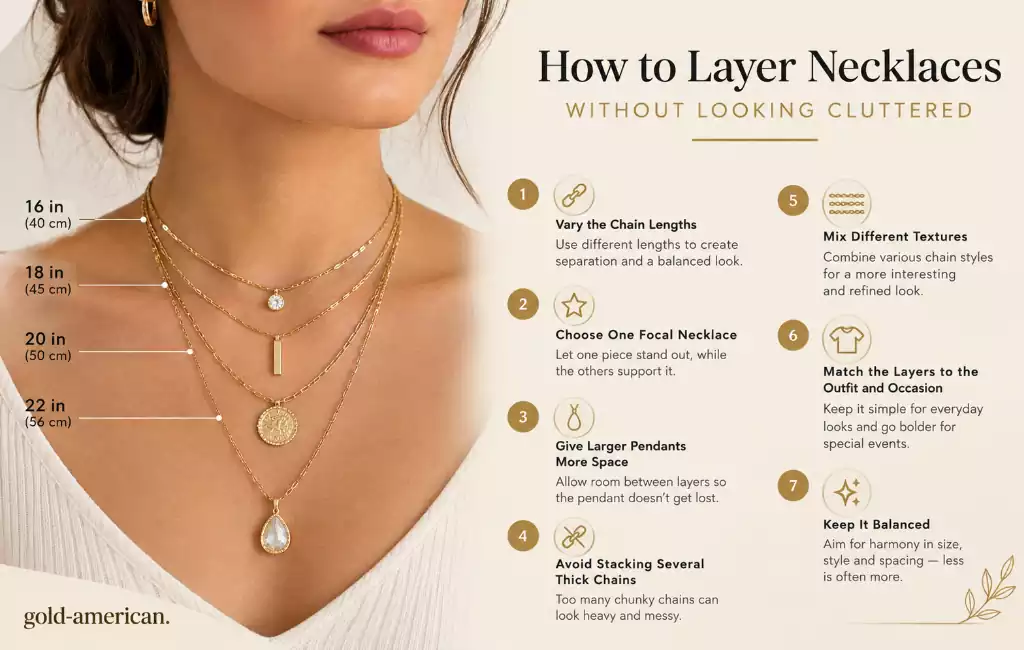
How to Layer Necklaces Without Looking Cluttered
Length alone won’t guarantee a clean result — chain type, thickness, pendant size, and metal tone all shape how the final look reads.
- Vary the length of each chain.
- Choose one necklace as the focal piece.
- Give larger pendants extra room.
- Skip stacking several thick chains at once.
- If chains keep tangling, widen the gap between lengths.
- Mix textures for visual contrast.
- Match the number of layers to the outfit and occasion.
To avoid a heavy or tangled appearance, focus on fine, delicate chains that complement rather than compete with one another. Incorporating pieces from a minimalist gold jewelry collection is the easiest way to ensure your layered stack remains elegant and refined for everyday wear.
According to www.vogue.co.uk:
The most talked about and immediately translatable styling trend for spring/summer 2026 was layering jewellery over clothing.
Necklace Length by Neckline
Necklace Layering by Neckline
16 + 18 + 20 in
Creates a layered shape that can follow the V.
16 + 18 + 20 in
Keeps short and medium layers clearly visible.
16 + 20 + 22 in
Uses the extra open space for wider layering.
20 + 22 + 24 in
Longer chains tend to remain more visible.
Your neckline shapes which necklace length actually shows.
| Neckline | Suggested Combination | Note |
|---|---|---|
| V-neck | 16 + 18 + 20 in | Layers can trace the line of the V |
| Round neck | 16 + 18 + 20 in | Short and medium layers read clearly |
| Open neckline | 16 + 20 + 22 in | More surface area to display the necklace |
| High neckline | 20 + 22 + 24 in | Longer lengths tend to show best |
| Off-shoulder | 14/16 + 18 + 20 in | Room for extra layers near the neck |
Treat this as a starting point rather than a rule — it’s still worth measuring your own neck and checking how a neckline actually sits before finalizing lengths.
What’s the Difference Between 16, 18, and 20-Inch Necklaces?
- 16 inches sits close to the neck, around the collarbone — a natural fit for a short layer or a delicate chain.
- 18 inches is one of the most common everyday lengths, landing at or just below the collarbone, which makes it a solid base to build a layered look around.
- 20 inches drops below 18 inches, opening up more room for a pendant or an additional layer.
Put 16-, 18-, and 20-inch chains together and the gaps are wide enough for each one to claim its own spot, without leaving the set looking disconnected.
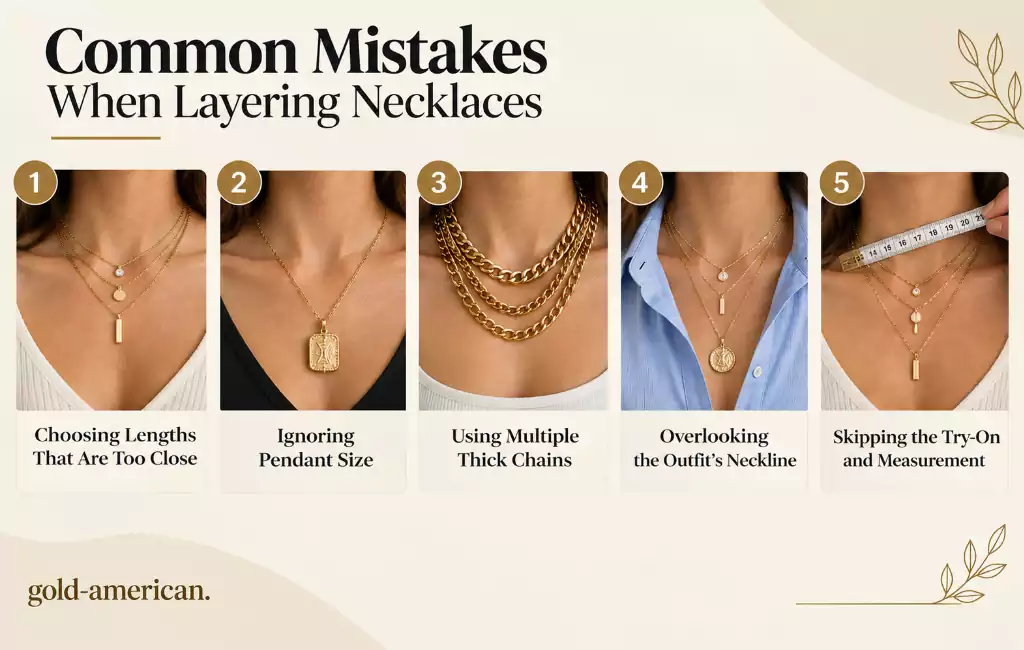
Common Mistakes When Layering Necklaces
1. Choosing lengths that are too close together: When two necklaces differ by only a fraction, they tend to overlap and blur into one another.
2. Ignoring pendant size: A large pendant needs breathing room. Put it on a short chain and it’s likely to clash with the other layers.
3. Reaching for too many thick chains: Stack several heavy chains together and the whole look can start to feel busy rather than intentional.
4. Overlooking the neckline: A 16-18-20 set might look great with one top and get partly swallowed by a different neckline entirely.
5. Skipping the fitting step: A number on a label only tells you the chain’s length — not exactly where it’ll land on your particular frame.



A Simple Rule for Getting Started
If you are layering necklaces for the first time, focus on the spacing between their lengths first. Once the lengths are suitably staggered, you can introduce variations in chain style, thickness, texture, and pendant size. This way, rather than simply picking and stacking several different necklaces, you establish the core structure of the look first and then layer in the details.
How Many Layers Are Right for a Gold Necklace Look?
Two or three layers is typically enough to build in length variation without overcomplicating things. For something simple, start with 16 + 18 inches. Want a third layer? 16 + 18 + 20 inches keeps things structured. Adding a larger pendant to the mix usually means extending that third layer to 22 or 24 inches to give it space. The more layers you add, the more attention length, thickness, style, and pendant size all need relative to one another.
If one layer includes a pendant, leave enough vertical space for it to hang without colliding with the chains above. A gold pendant necklace often works well at 20, 22, or 24 inches, depending on the pendant size and where you want the focal point to sit.
If you’re layering a personalized piece such as a gold name necklace, it usually helps to give that necklace its own clear position rather than placing another pendant too close to it. Use a shorter simple chain above and a longer, quieter layer below.
Final Thoughts: What’s the Best Length for Layering?
Choosing the best necklace length for layering comes down to spacing, not chasing a single “correct” number.
Combinations worth starting with:
- 16 + 18 + 20 inches: a delicate, everyday set
- 18 + 20 + 22 inches: more breathing room between layers
- 16 + 20 + 24 inches: clear separation between the shortest and longest pieces
Neck size, body shape, outfit style, chain thickness, and pendant size all factor into the final call — and if a pendant is part of the mix, its placement should shape which length you reach for. To browse necklace styles suited to a layered look, you can explore Gold American’s collection on their official site: Gold American.
Choosing the right chain style is just as important as getting the lengths properly staggered. If you are ready to start building your personal collection, explore our comprehensive buying guide for the best gold necklaces for women to discover styles that layer flawlessly together.
Ready to Build Your Perfect Necklace Stack?
Whether you need a delicate 16-inch base chain or a custom 24-inch pendant, Gold American crafts premium pieces designed to layer flawlessly. Need styling advice or custom sizing? We are here to help!
Explore our collection of custom name necklaces, pendants, and solid gold chains.
Frequently Asked Questions About Necklace Length & Layering
1. What is the best necklace length for layering?
16-18-20 inches is one of the simplest starting points. For more space between layers, try 18-20-22 inches.
2. Is 18 inches good for layering?
Yes — it’s one of the most common necklace lengths and works well as the main layer in a multi-necklace look.
3. Can you wear 16- and 18-inch necklaces together?
Yes. The two-inch difference gives enough separation for two distinct layers.
4. What length works best for a large pendant?
Most combinations use 20 to 24 inches to give a larger pendant more room, though the pendant’s actual size and your body shape still matter.
5. Do all layered necklaces need to match in material?
No. Mixing metals and textures works fine — just aim for balance in color, thickness, length, and style across the set.